

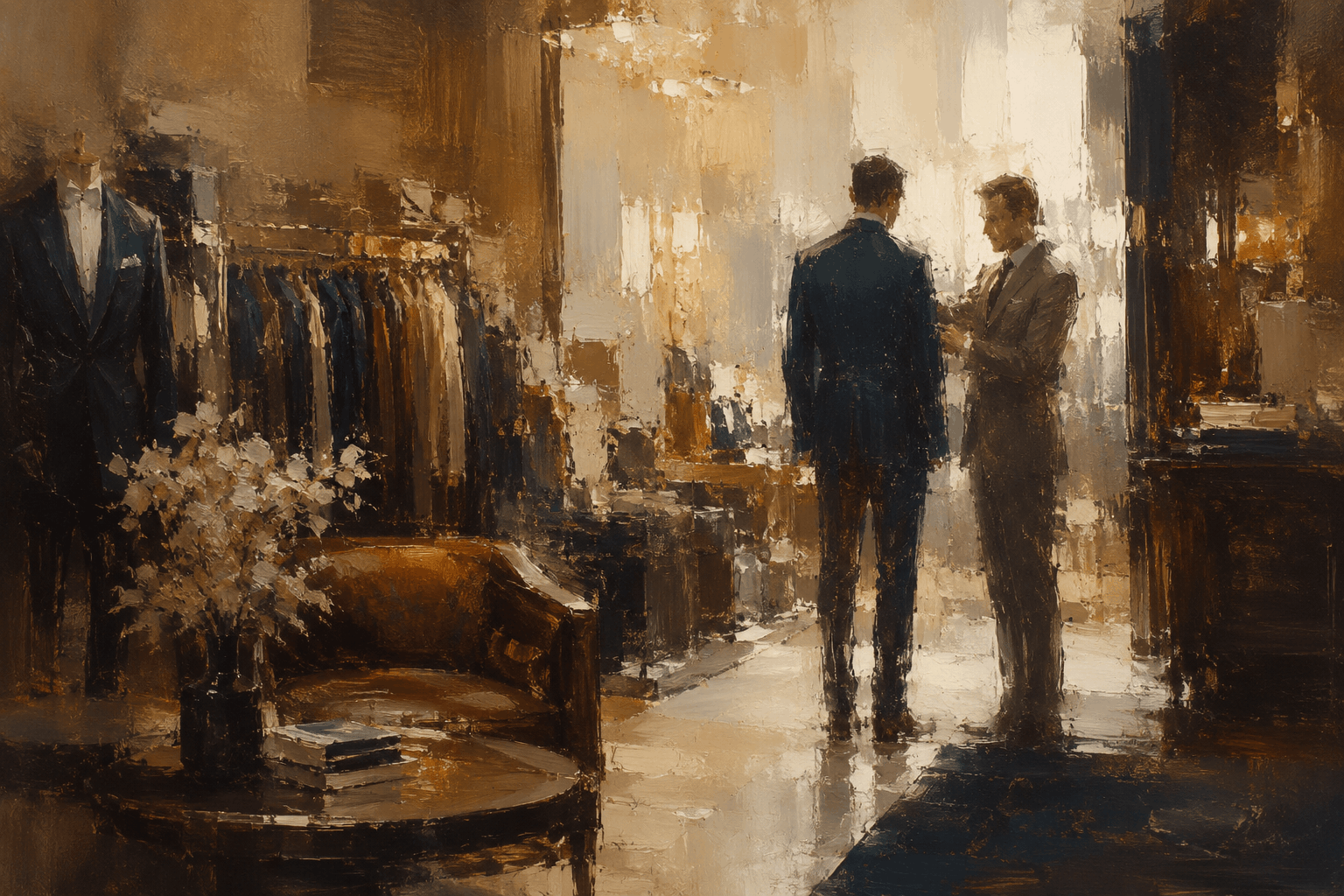
There was a time when hospitality was expected.
Not because it was written in a training manual, but because it was woven into the fabric of commerce itself. A handshake mattered. A cup of coffee offered to a guest mattered.Remembering someone’s name mattered. The best businesses understood that they were not merely selling products — they were caring for people.
Somewhere along the way, many industries forgot that.
Retail became transactional. Restaurants became rushed. Service became automated. Efficiency
replaced attentiveness. Convenience replaced connection. Entire industries began treating
hospitality as an “extra” instead of the foundation.
At Manno Clothing, we believe the opposite.
We believe hospitality is the business.
Not as a marketing tactic. Not as a luxury add-on. But as a reflection of who we are, what we value, and how we believe people deserve to be treated.
The product matters. Craftsmanship matters. Tailoring matters. But before any of that, people
matter.
And hospitality is how you prove it.
Hospitality Is Not About Luxury — It Is About Care
Many people confuse hospitality with extravagance.
They imagine chandeliers, expensive drinks, valet parking, or lavish hotels. But true hospitality has very little to do with money.In most cases, hospitality costs almost nothing.
- A warm greeting costs nothing.
- Offering someone a seat costs nothing.
- Remembering a client’s name costs nothing.
- Walking a customer to the door costs nothing.
- Making someone feel comfortable, seen, and valued costs nothing.
- Yet these small acts have become increasingly rare.That is what makes them powerful.
The irony is that many businesses spend enormous amounts of money on branding, advertising,
and customer acquisition while neglecting the simplest and most effective differentiator
available to them: effort.
Hospitality is effort made visible.
People can feel when someone genuinely cares. They can also feel when someone is simply trying to process the next transaction.
The stores, restaurants, and businesses that people remember are rarely the ones with the flashiest interiors or lowest prices. They are the places where people felt welcomed.
That feeling lasts.
The Decline of Hospitality in Modern Service Industries
Hospitality has declined for many reasons, but one of the largest is speed.
Modern business worships efficiency.
- Self-checkout lanes.
- Automated systems.
- QR code menus.
- Chatbots.
- Online ordering.
- Minimal human interaction.
Convenience certainly has its place, and technology can be incredibly useful. But many businesses have unintentionally stripped away the very human elements that once made experiences memorable.
The result is a strange contradiction:
we are more connected digitally than ever before, yet many experiences feel colder and more impersonal than they did twenty years ago.
In retail especially, staffing has often shifted from relationship-building to task management.
Employees are trained to:
- process transactions,
- fold inventory,
- hit metrics,
- answer quick questions,
- move quickly.
But fewer people are taught how to host.
And there is a difference between serving someone and hosting someone.
- A host anticipates needs.
- A host creates comfort.
- A host takes ownership of the experience.
- A host slows down enough to care.
- Hospitality requires intentionality, and intentionality requires effort.
- That is precisely why it stands out today.
Great Hospitality Is Often the Result of Discipline
One of the greatest misconceptions in business is that hospitality is simply personality.
It is not.
Some people are naturally warm, but exceptional hospitality is usually the result of discipline and culture.
It comes from choosing to care every single day — even when you are tired, busy, frustrated, or overwhelmed.
Anyone can provide good service when it is convenient.
The real test is whether you can provide hospitality when it is inconvenient.
That is where culture reveals itself.
At a great store, hospitality is not random. It is intentional.
The details matter:
- greeting clients immediately
- offering them something to drink,
- preparing fitting rooms properly,
- remembering preferences,
- taking time during fittings,
- handling garments carefully,
- walking completed purchases to the car,
- following through after the sale.
None of these things are complicated.
- Most cost little or nothing.
- What they require is effort.
- And effort has become rare.
Ironically, that rarity is exactly why hospitality has become such a competitive advantage.
Hospitality and the Human Desire to Be Known
At its core, hospitality fulfills something deeply human:
the desire to feel acknowledged.
People want to feel seen.
- Not scanned.
- Not processed.
- Not rushed.
Seen.
A man may come into a clothing store believing he needs a sport coat, but often what he truly wants is confidence, reassurance, guidance, or simply to feel respected.
That is why hospitality matters so much in our industry
- Clothing is personal.
- Tailoring is personal.
- Appearance is personal.
When someone entrusts you with how they present themselves to the world, they are placing themselves in a vulnerable position whether they realize it or not.
Hospitality creates trust.
Without trust, a transaction may occur.
But a relationship rarely will.
The Biblical Roots of Hospitality
Hospitality is not merely a business philosophy.
It is deeply biblical.
Throughout Scripture, hospitality is treated as a moral responsibility, not a business strategy.
Romans 12:13 instructs believers to:
“Practice hospitality.”
Hebrews 13:2 says:
“Do not neglect to show hospitality to strangers.”
1 Peter 4:9 says:
“Offer hospitality to one another without grumbling.”
In biblical tradition, hospitality was considered an expression of humility, generosity, and service. Welcoming someone into your presence — whether into your home or your business — was viewed as an opportunity to honor them.
That perspective changes everything.
If hospitality is merely transactional, people eventually feel manipulated.
But when hospitality comes from a genuine desire to serve others well, it becomes authentic.
At Manno Clothing, we believe hospitality reflects stewardship.
Every person who walks through our doors is giving us something incredibly valuable:
their time,
- their time,
- their trust,
- and their attention.
We should treat that responsibly.
- The coffee matters.
- The greeting matters.
- The atmosphere matters.
- The fitting matters.
- The follow-up matters.
Not because it increases sales — although often it does — but because serving people well is the right thing to do.
Hospitality Creates Memory
Most people eventually forget prices.
- They forget promotions.
- They forget percentages.
- They forget exact garments.
But they rarely forget how a place made them feel.
People remember:
- the tailor who stayed late to help them before a wedding,
- the associate who calmed their nerves before an important event,
- the store owner who greeted them by name,
- the moment someone made them feel confident again.
That is hospitality.
And those moments are often far more powerful than the product itself.
A truly great retail experience feels less like shopping and more like being cared for.
Why Hospitality Will Matter Even More in the Future
As technology continues advancing, genuine hospitality will become even more valuable.
- Artificial intelligence can answer questions.
- Algorithms can recommend products.
- Websites can process transactions.
But technology cannot genuinely care.
- It cannot shake someone’s hand with sincerity.
- It cannot read nervous body language during a fitting.
- It cannot build trust through presence.
- It cannot create belonging.
Human connection will become increasingly rare — and therefore increasingly valuable.
Businesses that understand this will survive.
Businesses that master it will thrive.
Because no matter how modern society becomes, people will always crave warmth,attentiveness, and authentic interaction.
Hospitality is timeless because human nature is timeless.
More Than a Store
At Manno Clothing, we do not simply want to sell garments.
We want people to feel welcomed the moment they walk through the door.
We want them to slow down.
- To enjoy the experience.
- To feel guided rather than pressured.
- To feel cared for rather than processed.
We believe hospitality is not separate from tailoring, craftsmanship, or style.
It is the thread that ties all of it together.